
Most composting toilets covered on this site run $650 and up, which is a real barrier if you just want to try the category out or only need something for occasional trips. A genuine sub-$300 tier does exist — you just need accurate expectations about what you’re trading away to get there.
This tier has grown considerably over the past few years as European brands specifically built around budget portable use have entered the US market, giving buyers a genuine low-commitment entry point that simply didn’t exist a few years ago beyond building something yourself.
What’s Actually Under $300 Right Now
| Model | Approx. Price | What You Get | What You Give Up |
|---|---|---|---|
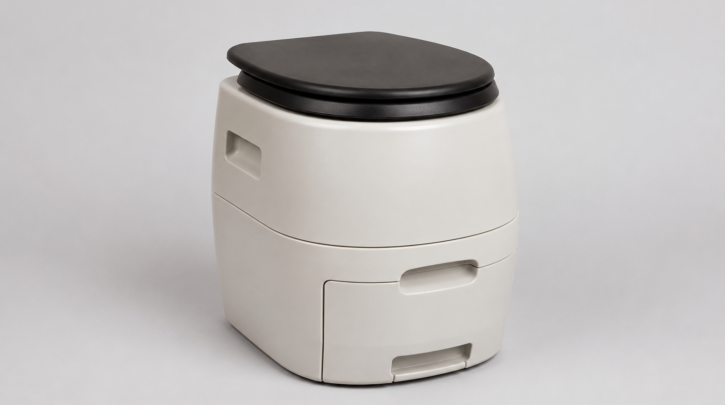
| OGO Nomad | ~$269 | 9 lbs, urine-diverting bowl, 3-year warranty | Small ~1.2 gal urine bottle, bag-based solids only |
| BOXIO Toilet | $180–$230 | Established brand, 5L solids container, hemp husk medium | Similar small capacity; low seat height some find uncomfortable |
| Trobolo WandaGo | Under $300 in most listings | Larger solids capacity relative to price than Boxio/Nomad | Bag-based, no agitator, less established in the US market |
Notably absent here: Trelino, CompoCloset Cuddy, Nature’s Head, OGO Origin, Air Head, and Separett Villa all sit above $300, most well above it. If you see any of these listed “under $300,” it’s very likely a used unit, a partial kit, or an outdated price — verify current pricing directly with the manufacturer before assuming a deal is real.
Why This Tier Costs Less
The price gap comes down to a handful of consistent design choices across every model in this tier. None use an electric or hand-crank agitator — they rely entirely on a layering method, where you manually sprinkle fresh carbon additive after each use rather than a mechanism mixing it for you. None include active fan ventilation, relying instead on a tight-fitting lid and urine diversion alone for odor control. And urine capacity runs considerably smaller — roughly a gallon or so — versus the 2+ gallon bottles on van-oriented self-contained units, meaning daily rather than every-few-days emptying.
A Closer Look at Trobolo WandaGo
Trobolo is a less familiar name in the US market than BOXIO, but it’s worth a specific mention since reviewers consistently cite its WandaGo model as offering a larger solids capacity for the price than either BOXIO or the Nomad — a meaningful advantage if capacity matters more to you than brand recognition or accessory ecosystem. It uses the same bag-based, no-agitator approach as the rest of this tier, and pricing typically lands comfortably under the $300 threshold. The main tradeoff is a smaller US-based support and review base compared to BOXIO specifically, simply because it’s newer to this market — worth factoring in if you value a large body of existing owner reviews before buying.
Real Owner Feedback on the Budget Tier
Across independent reviews of BOXIO, the Nomad, and Trobolo, a consistent pattern emerges: owners who bought expecting a scaled-down version of a premium self-contained unit are sometimes surprised by how much more actively hands-on the layering method is compared to an agitator-equipped design, while owners who went in with accurate expectations about what a sub-$300 unit does and doesn’t do report high satisfaction. The single most repeated piece of advice across reviews is to be disciplined about adding carbon additive after every use rather than occasionally — since there’s no fan actively managing airflow, this manual habit does more of the odor-control work than it would with a premium unit.
Who This Tier Is Actually Right For
Occasional campers, hunters, boat day-trippers, and anyone testing whether a composting toilet fits their lifestyle before committing to a $650+ self-contained unit. It’s a genuinely reasonable strategy to start here, learn your own usage patterns and preferences over a season or two, then decide whether to upgrade to something like Nature’s Head or CompoCloset Cuddy once you know what actually matters to you in daily use.
Who Should Skip This Tier
Full-time van or RV dwellers will find the daily urine-emptying routine and smaller solids capacity genuinely more tiresome over months of continuous use than it would be for occasional weekend trips — see our van life buying guide for options built specifically for that use pattern instead. Anyone planning a permanent cabin or off-grid home installation should also look at the cabin-oriented brands covered in our cabin buying guide, which are a different category of product entirely.
A Reasonable Upgrade Path
If you start in this budget tier and later decide you want more capacity or an agitator, none of these three specific models offer a direct upgrade path the way CompoCloset’s Cuddy/Cuddy Lite line does — you’d be buying a new, different unit rather than adding a component to your existing one. This isn’t really a downside given the low initial cost; think of a sub-$300 purchase as a reasonable, low-risk way to learn your own usage patterns, then apply that knowledge toward a more considered purchase later if your needs grow, rather than expecting the same unit to scale with you indefinitely.
Getting the Most Out of a Budget Unit
Since none of these rely on active ventilation, staying disciplined about carbon additive after every single use matters more here than with a vented, agitator-equipped unit — skipping a layer even once is more likely to produce a noticeable smell in a budget unit than in a self-contained model with a working fan actively pulling air through the chamber. Keep the urine bottle on a strict daily (or twice-daily for two users) schedule rather than waiting for it to visibly fill, since these smaller bottles have less margin before overflow than a 2+ gallon bottle would.
Where to Buy and What to Watch For
All three brands in this tier sell directly through their own websites and through Amazon, and pricing is generally consistent across both channels — the main thing worth watching for is bundled starter kits versus the toilet alone, since marketing pages often lead with a bundle price that includes extras (cushions, carrying cases, extra bags) rather than the base unit’s standalone price. Compare like-for-like before assuming one brand is meaningfully cheaper than another; sometimes the gap is just what’s included in the box rather than a real price difference on the toilet itself.
Warranty and Return Policies Across the Budget Tier
Warranty coverage in this tier is generally shorter than the premium brands covered elsewhere on this site, which makes sense given the price gap — OGO backs the Nomad with a 3-year warranty, a genuinely strong figure for this price point, while BOXIO and Trobolo’s coverage terms are worth confirming directly at time of purchase since they can vary by retailer and region. Return policies matter more here than with a big-ticket purchase, since a budget unit is a lower-risk way to try the category, but only if you can actually send it back should it not suit your needs — check the specific return window and condition requirements before buying rather than assuming standard e-commerce return norms apply.
Ultimately, the budget tier’s biggest value isn’t any single spec on a comparison chart — it’s the low financial risk of finding out whether this whole category actually fits how you camp, travel, or live, before spending several times as much on a premium unit you’re not yet sure you’ll be happy with.
Related Guides
Frequently Asked Questions
Is a sub-$300 composting toilet actually reliable, or is it a gimmick?
These are genuine, functional composting toilets using the same core urine-diversion and carbon-additive principles as premium models — the price difference reflects fewer features (no agitator, no fan) and smaller capacity, not a fundamentally different or lower-quality technology.
Is a DIY bucket toilet cheaper than any of these?
Yes, often meaningfully so — see our DIY composting toilet guide and 5-gallon bucket composting toilet guide for the full breakdown if budget is your absolute top priority over convenience and a finished, purpose-built product.
Can I upgrade a budget unit with an agitator or fan later?
Generally no — these models aren’t designed with that kind of modular upgrade path. CompoCloset’s Cuddy/Cuddy Lite line, covered in our van life and camping guides, is the main exception offering a genuine upgrade path, though it starts above this $300 budget tier.
How long do budget units typically last?
OGO backs the Nomad with a 3-year warranty, and both BOXIO and Trobolo have reasonable track records for their price tier, though none have the decade-plus history that Nature’s Head or Air Head can point to. For occasional use, expect several years of reliable service; for daily heavy use, expect a shorter effective lifespan than a premium unit built for that load.
Do these budget units work as well in a boat or hunting blind as they do camping?
Yes — all three brands in this tier are explicitly marketed across camping, boating, and hunting use cases, and the core design doesn’t change based on where you’re using it. See our dedicated boats/marine and hunting guides for use-case-specific considerations beyond the toilet itself.