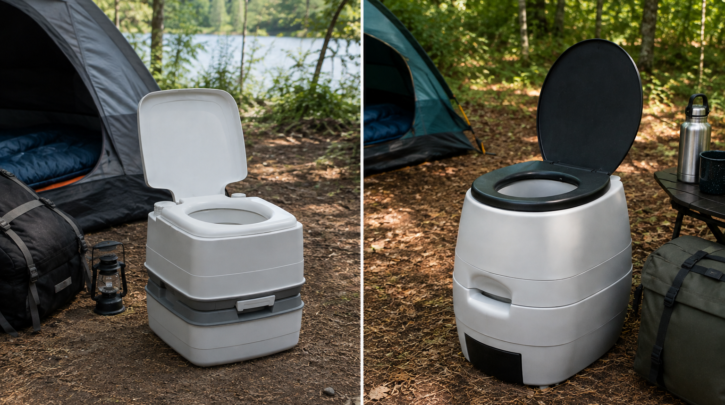

For occasional camping, a simple chemical or bag-based portable toilet is the other realistic option alongside a budget composting toilet, and the two are priced closely enough that the decision often comes down to how you feel about the disposal process rather than cost alone.
How Each Works
A basic portable camping toilet — think a simple bucket-style unit or a small chemical cassette like a Porta Potti — either uses a chemical deodorizing packet with a holding tank, or a plastic bag system with a gelling powder, to contain and mask waste until it can be disposed of at an appropriate facility or in regular trash, depending on the specific system and local rules. A portable composting toilet like BOXIO or the OGO Nomad separates liquid from solid waste at the source and uses a carbon-rich medium instead of chemicals to manage moisture and odor, following the same basic principles covered in our how composting toilets work guide, just without active fan ventilation.
Cost Comparison
| Factor | Portable Camping Toilet | Portable Composting Toilet |
|---|---|---|
| Upfront cost | $25–$150 for basic bucket/bag systems and small cassette units | $180–$375+ for the budget-to-mid composting tier |
| Ongoing cost | Chemical packets or gelling bags, recurring per-trip cost | Carbon additive (coco coir, sawdust), cheap and reusable across trips |
| Odor control method | Chemical deodorizer or gelling agent | Urine diversion + carbon additive |
| Disposal | Dump station, approved toilet, or bagged trash depending on system and local rules | More flexible — see local regulations for solids specifically |
| Learning curve | Minimal — very close to a familiar toilet experience | Small — urine diversion and additive habit take a trip or two to get used to |
What a Weekend Actually Looks Like With Each
With a chemical portable toilet, a typical weekend involves minimal thought after initial setup — use it, and the chemical packet handles odor until you reach a dump station or approved disposal point, similar in spirit to how a cassette toilet works in an RV. With a portable composting toilet, the routine is slightly more hands-on: add a scoop of carbon additive after each solid use, and plan on emptying the smaller urine container roughly once a day for one person, more often for two. Neither routine is genuinely difficult, but the composting option asks for a bit more ongoing attention in exchange for its other benefits, which is worth being honest with yourself about before your first trip rather than discovering it partway through a weekend away from home.
Environmental Considerations
Chemical portable toilets rely on deodorizing chemicals that need proper disposal at an approved facility — dumping chemically-treated waste in the wrong place is both against most land management rules and genuinely worse for the environment than untreated waste in some respects, since the chemicals themselves can affect soil and water in ways plain composted material doesn’t. Composting toilets avoid this chemical dependency entirely, which is a meaningful factor for campers who prioritize minimizing their environmental footprint, though proper disposal of solids still matters regardless of which system you choose — see our fertilizer safety guide for the relevant caution around any use of composted human waste beyond simple disposal.
Choose a Portable Camping Toilet If:
- You want the absolute lowest upfront cost and simplest possible experience
- You camp rarely enough that recurring chemical or bag costs stay genuinely minor
- You’ll always have access to a dump station or approved disposal point nearby
Choose a Portable Composting Toilet If:
- You camp often enough that ongoing chemical costs would add up meaningfully over a season
- You want to avoid chemicals for environmental reasons or personal preference
- You camp in remote spots without reliable dump station access
The Honest Tradeoff
A basic portable camping toilet genuinely wins on simplicity and upfront price for very occasional use — there’s essentially no learning curve, and the chemical or gelling system is about as close to a familiar bathroom experience as you’ll get outside a plumbed structure. A composting toilet asks a bit more of you: sitting correctly for proper diversion, adding carbon additive consistently, and thinking about solids disposal a bit more deliberately since it’s not always as simple as a single designated dump station. What you get in return is lower ongoing cost across a full camping season, no chemicals, and — once you’re used to it — comparable or better odor control, since a well-managed composting toilet doesn’t rely on a chemical scent that fades as the tank fills.
Capacity and Party Size
Basic chemical portable toilets and budget composting toilets both tend to be sized for one or two people rather than a large group, but they scale differently as party size grows. A chemical unit’s holding tank simply fills faster with more users, shortening the interval before you need a dump station regardless of anything else. A composting toilet’s two separate capacities — a smaller, more frequently emptied liquids container and a larger, less frequently emptied solids bag — mean the liquids side becomes the binding constraint first with more users, often needing attention multiple times a day for a group of three or four rather than the daily rhythm a solo camper experiences.
Weather and Climate Considerations
Hot, humid climates work against a chemical portable toilet’s deodorizer somewhat, since heat accelerates the breakdown that eventually causes odor to return before the tank is even full, while a composting toilet’s carbon additive genuinely benefits from a slightly more generous hand in humid conditions to keep pace with added ambient moisture, the same principle covered in our general odor guide. Cold weather affects both differently: a chemical toilet’s liquid contents can freeze in genuinely cold conditions the same as any liquid-holding container, while a composting toilet’s main cold-weather effect is simply slower composting, not any risk to the container itself unless liquid is left to freeze inside it.
Which One Do First-Time Campers Actually Regret Less?
Across reviews and camping forum discussions, first-time buyers who chose a chemical portable toilet rarely regret the decision if their camping stayed occasional — the simplicity genuinely matches the use case. Where regret shows up more often is among campers who upgraded from chemical to composting after a season or two of frequent use, wishing they’d made the switch sooner once they realized how much smaller the ongoing cost and hassle actually was compared to their initial assumption. The reverse — composting toilet buyers wishing they’d started with a chemical unit instead — comes up far less frequently in the sources we reviewed, suggesting the learning curve concern is a bigger perceived barrier than it turns out to be in practice for most people.
If you’re genuinely torn, camping frequency this season is the single best predictor to use — a handful of trips favors starting simple with a chemical unit, while a full season of regular weekend use tips the math toward composting from the start.
A Middle Ground Worth Knowing About
Some campers keep both: a simple chemical or bag toilet as a lightweight backup for very short trips or emergencies, and a composting toilet as the default for anything longer than a weekend. This isn’t necessary for most people, but it’s a reasonable approach if you’re not ready to fully commit to one system and want to see how your actual camping patterns shake out over a season before settling on one setup.
Related Guides
- Best portable composting toilets for camping
- Best budget composting toilets under $300
- Composting toilet vs. cassette/chemical toilet
Frequently Asked Questions
Is a portable composting toilet harder to use than a chemical one?
Not significantly — the main adjustment is sitting slightly differently for proper urine diversion and remembering to add carbon additive after solid use, both of which become automatic within a trip or two.
Do I need to empty a composting toilet more often than a chemical one while camping?
Liquids, generally yes, since portable composting toilet urine containers tend to be smaller than a chemical cassette’s combined tank. Solids stretch further — 8–10 uses per bag is common — comparable to or better than a small chemical unit’s capacity.
Which is better for a multi-week backcountry trip?
A composting toilet generally has the edge here, since disposal isn’t tied to a single chemical dump station the way some cassette systems are, and it avoids carrying or restocking chemical packets for an extended trip.
Can kids or guests use a portable composting toilet without issues?
Yes, with a brief explanation of the urine-diversion seating beforehand — this is a small learning curve, not a barrier, and most first-time users adjust within one or two uses.
Does either option work better in a shared campsite with multiple families?
A composting toilet generally holds up better under shared, multi-family use since its capacity split between liquids and solids gives more total flexibility than a single combined chemical tank, though both options benefit from a clear, agreed-upon emptying schedule when multiple households are sharing one unit.
Which option is better for someone with no camping experience at all?
A chemical portable toilet has a marginally gentler learning curve for a genuine first-timer, simply because it more closely resembles a familiar bathroom experience. That said, the composting toilet learning curve is small enough that it shouldn’t be a deciding factor on its own — most new users adapt within their first trip regardless of prior camping experience.