

Our general Separett Villa review covers the model broadly across use cases. This page goes deeper specifically on what a permanent, fixed cabin or off-grid home installation actually involves — the planning, drain routing, and code considerations that matter far more here than in a van or RV retrofit.
Why Fixed Installation Changes the Calculation
This distinction is worth sitting with before you read any further, since it reframes every tradeoff discussed in our general review through a different lens.
In a van, the Villa’s external urine drain is a genuine obstacle — most layouts simply don’t have anywhere sensible to route it. In a fixed cabin installation, that same design becomes the model’s biggest advantage, since you can plan the drain route during construction rather than retrofitting around an existing layout. This single difference is why the Villa shows up so differently across our van life guide versus our cabin guide: it’s the same product, but the installation context changes which of its tradeoffs actually matter.
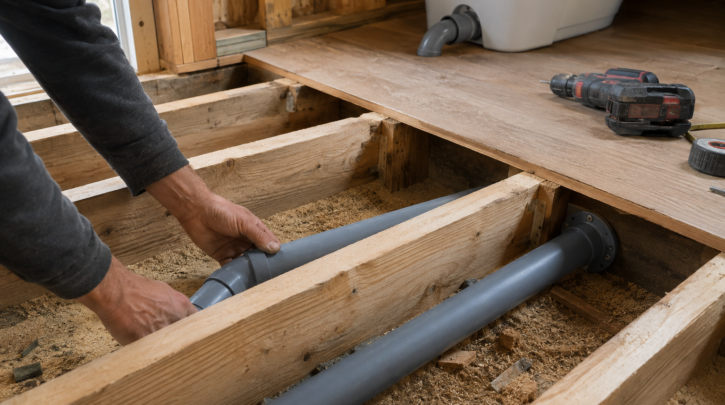
Planning the Urine Drain Line
The drain line can route to a dedicated drain field, a leaching bed, a holding tank, or — with the optional Ejektortank accessory — a diverter system for using diluted urine as fertilizer. Before finalizing your plan, check local regulations specifically for where diverted liquid waste can legally go; requirements vary meaningfully by jurisdiction, particularly for anything that could reach groundwater. This is exactly the kind of detail worth confirming with your local health department before you pour a foundation or finalize a floor plan around a specific drain route, since moving it later means real rework.
Vent Routing for a Fixed Install
The Villa’s fan can handle installations up to 20 feet of hose with up to three 90-degree elbows — a meaningfully longer run than most self-contained van units support, which matters in a cabin where the bathroom might sit further from an exterior wall than a van’s tight floor plan would ever require. This gives you more flexibility in floor plan design than you’d have with a shorter-rated competitor, though it’s still worth keeping the run as short and straight as your layout reasonably allows, for the same airflow-efficiency reasons covered in our general venting guide.
Power Planning for Off-Grid Cabins
The Villa’s 12V DC mode draws just 0.06 kWh per 24 hours — low enough that a modest solar setup with basic battery storage handles it without strain, provided the rest of your system has been sized appropriately for your actual household’s overall power needs. For cabins that switch between shore/grid power and battery power seasonally, the Villa’s dual 12V DC / 110-240V AC compatibility means you don’t need a separate inverter setup just to keep the toilet running through a power transition.
Solids Capacity in a Fixed, Higher-Use Context
A cabin used regularly by a family sees considerably more use than the same unit would in a van occupied by one or two people, and the Villa’s 6-gallon solids container, while generous, still requires realistic planning around your actual household size. For a full-time family of four, expect meaningfully more frequent emptying than the “no additive needed” marketing framing might suggest — the biodegradable bag system does make that more frequent emptying easier to manage than a hand-crank alternative would be, but frequency itself doesn’t change.
Permitting for a Fixed Installation
Unlike a vehicle installation, a permanent cabin install is very likely to require a permit reviewed by your local health department, typically under the same process used for septic and other onsite wastewater systems. NSF/ANSI 41 certification — which the Villa carries — significantly improves your odds of approval, but it doesn’t guarantee it; some counties add requirements around the drain line destination specifically. See our full legal requirements and permits by state guide before you finalize any construction plans, and budget realistic time for the permitting process itself, which can take weeks depending on your local health department’s current workload.
Maintenance Routine for a Fixed, Higher-Traffic Install
A fixed cabin install used by a family sees a genuinely different maintenance rhythm than the same unit in a van occupied by one or two people traveling part-time. Plan for a realistic weekly routine rather than the more relaxed schedule a lightly-used van install might allow: check the solids bag level every few days during periods of heavy use, keep a supply of biodegradable bags on hand rather than discovering you’re out mid-week, and periodically inspect the drain line connection points during your regular cleaning routine, since these are the parts of the system genuinely unique to a drain-based design compared to every self-contained competitor covered elsewhere on this site.
Comparing to a Central/Batch System for Higher Capacity
If your household is larger than what the Villa’s 6-gallon solids container comfortably supports, it’s worth understanding the alternative before assuming you simply need to empty more often. A central or batch composting system — where the toilet fixture sits separate from a much larger composting chamber, often below the floor or in an adjacent utility space — handles higher sustained volumes than any self-contained or single-unit drain-based design, at the cost of a considerably bigger footprint and installation project. This is a genuinely different category of system, covered in more depth in our upcoming two-chamber batch systems guide, and worth considering specifically if you’re building new construction for a larger, full-time household rather than retrofitting an existing cabin.
Who This Installation Path Is Best For
New cabin construction where the drain route can be planned from the start, off-grid homes with a reliable (even if modest) solar or battery setup, and any fixed installation where you specifically want to avoid the daily urine bottle chore that self-contained units require. It’s a considerably better fit here than in a retrofit into an already-finished structure, where routing a new drain line becomes a much bigger, more disruptive project.
Common Retrofit Challenges
Retrofitting the Villa into an existing cabin that wasn’t originally plumbed for this kind of system tends to surface a few predictable challenges worth planning for ahead of time. Finding a viable drain route often means working around existing floor joists and foundation elements rather than the clean, planned path new construction allows, and it’s worth having a contractor or experienced DIYer assess feasibility before purchasing the unit rather than after. Bringing power to the bathroom location, if it isn’t already wired there, is a second common retrofit cost that’s easy to underestimate — running a new circuit through finished walls is considerably more labor than wiring an open stud bay during initial construction. Neither challenge is a reason to avoid the retrofit, but both are worth pricing out realistically before committing to a specific installation timeline.
Working With a Builder or Contractor Who’s Never Installed One
If you’re using a general contractor for your cabin build rather than doing the plumbing yourself, it’s worth accepting upfront that most builders have far more experience with conventional bathroom plumbing than with a urine-diverting drain system, simply because it’s a much less common request. Bring the manufacturer’s installation documentation to your first planning conversation rather than assuming it’s a familiar job, and budget a bit of extra time for your contractor to review the specific requirements — drain line slope, material compatibility, and destination point — before finalizing a quote. A contractor who’s upfront about not having done this before but willing to follow the documentation carefully is a better sign than one who claims familiarity they may not actually have; this is a genuinely different system from a standard toilet drain, and treating it as identical is a common source of avoidable installation problems.
Related Guides
- Separett Villa review (general)
- Best composting toilets for cabins
- Legal requirements/permits by state
Frequently Asked Questions
Can I install the Separett Villa myself in a cabin, or do I need a licensed plumber?
This depends entirely on your local code — some jurisdictions allow owner installation of alternative wastewater systems, others require a licensed installer for anything touching the permitted drain line. Confirm this specifically with your local permitting office before starting work.
Does the drain line need to be heated or insulated in a cold climate?
In climates with hard freezes, yes — an uninsulated exterior drain run risks freezing solid, which can damage the line and block flow. Plan the route to stay within heated or well-insulated space wherever possible, or add heat tape to any unavoidable exterior sections.
How does the fixed installation cost compare to a self-contained unit’s install cost?
Generally higher, since you’re planning and installing an actual drain line rather than just mounting a self-contained box — factor in additional materials and, if required by your jurisdiction, licensed labor costs beyond the unit’s purchase price itself.
Is it worth hiring a professional for the drain line specifically, even if I’m comfortable with general DIY work?
It depends on your local permitting requirements and your own experience with wastewater plumbing specifically — some jurisdictions require licensed installation for anything connecting to an approved drain field or leaching bed regardless of the installer’s general skill level. Check this specific requirement before deciding, since it may not be optional even if you’re otherwise a capable DIY builder.