
A workshop, she-shed, or backyard studio often doesn’t justify the cost and complexity of plumbing a full bathroom — running water and sewer lines to a detached structure can easily cost more than the shed itself. A composting toilet sidesteps that entirely, and the right choice depends mostly on how often the space actually gets used.
Occasional Use: A Portable Option Is Plenty
If the shed sees a few hours of use most days but isn’t anyone’s full-time workspace, the same budget and portable options covered in our budget composting toilets guide — BOXIO, OGO Nomad, Trobolo WandaGo — are genuinely sufficient. They need no power, no venting installation, and no permanent mounting, which keeps a shed conversion simple and reversible if you ever change how the space is used. BOXIO’s compact, stackable shape in particular fits naturally into a shed’s typically tighter footprint compared to a dedicated bathroom.
Daily, Heavy Use: Step Up to a Self-Contained Unit
For a shed that functions as a genuine daily workspace — a full-time home office, an active workshop, or a she-shed used most of every day — the daily urine-emptying routine of a portable unit becomes more of a chore than it’s worth. A self-contained unit like Nature’s Head or CompoCloset Cuddy, covered in our van life and RV guides, brings a larger urine bottle and solids capacity better suited to daily use, at the cost of needing an actual vent hole and possibly 12V wiring — a bigger step than a portable unit, but proportionate to daily use.
Power Access for a Detached Structure
Many sheds and she-sheds already have basic electrical service run for lighting and outlets, which makes adding a fan circuit for a self-contained composting toilet a minor addition to existing work rather than a new project. For a shed with no electrical service at all, weigh the cost of running a new circuit against simply using a non-electric portable option instead — for occasional or moderate use, a portable unit avoids the electrical work entirely, while daily heavy use genuinely benefits enough from active ventilation that the electrical work is usually worth it.
Resale Value of a Converted Shed
If you’re improving a shed or backyard structure with an eye toward eventual home resale, a composting toilet inside a detached structure is generally viewed as a practical amenity by buyers interested in a flexible workspace or guest structure, rather than a red flag the way it might be perceived in a primary residence by an unfamiliar buyer. That said, a portable, non-installed unit leaves the space more flexible for a future buyer to repurpose than a permanently plumbed and vented installation would, which is worth weighing if resale flexibility matters more to you than the convenience of a permanent setup.
She-Shed-Specific Comfort Considerations
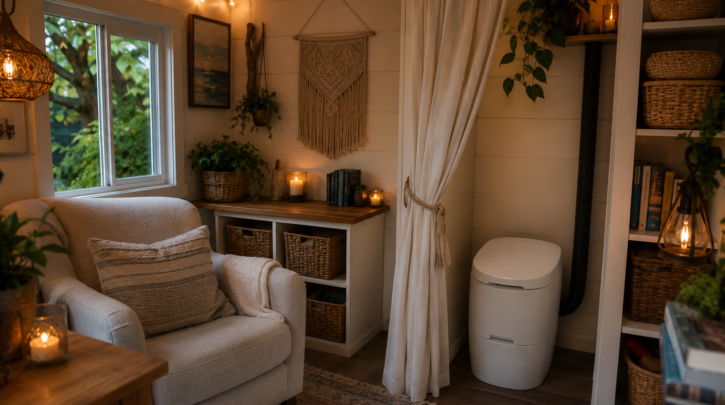
A she-shed used as a genuine retreat or creative space often gets more attention to aesthetics and comfort than a pure workshop does, and this is worth extending to the bathroom setup specifically. A basic portable unit works functionally identically regardless of surroundings, but a small effort toward a pleasant enclosure — proper lighting, a bit of decor, a comfortable seat height (worth pairing a BOXIO with its optional riser accessory here specifically) — goes a long way toward making the space feel like the retreat it’s meant to be, rather than a purely utilitarian add-on bolted onto an otherwise carefully designed space.
Ventilation for a Small Structure
A shed’s typically small interior volume means the same principles from our enclosure building guide apply, often more acutely — less air volume means less margin for a ventilation misstep before it’s noticeable. If you’re installing a self-contained unit with its own fan, route the vent the same way you would in a van, keeping the termination point away from any windows or doors the shed has. If you’re using a portable, non-vented unit, general shed ventilation (a window, a passive vent) becomes more important since there’s no active fan doing that work for you.
Legal and Permitting Considerations
This varies more than people expect. A portable, non-installed unit in a shed is generally unregulated, similar to using one for camping — there’s no permanent fixture or wastewater connection involved. A permanently mounted, vented self-contained unit is a bigger question mark: some jurisdictions treat this the same as any other composting toilet installation covered in our legal requirements and permits by state guide, particularly if the shed is a permitted accessory structure rather than a simple storage building. Check with your local building authority before a permanent install specifically, since “it’s just a shed” doesn’t automatically exempt a wastewater-adjacent fixture from review in every jurisdiction.
A Note on Privacy and Guest Use
If your she-shed or workshop occasionally hosts guests unfamiliar with composting toilets, a brief explanation of urine-diverting seating before their first use — the same guidance covered throughout this site — prevents most of the confusion or accidental misuse that would otherwise show up later as an unexplained odor issue. This is a small, easy step that pays off disproportionately in a shared or guest-facing space.
Cost Comparison: Composting Toilet vs. Full Plumbing
It’s worth putting real numbers next to this decision. Running water and sewer service to a detached structure typically means trenching, connecting to the main house’s system or a separate small septic solution, and permitting — costs that commonly run into the thousands of dollars even for a short run, and considerably more if the shed sits far from existing plumbing or your soil doesn’t easily support the necessary connection. A composting toilet, by contrast, costs anywhere from under $300 for a portable unit to $1,000+ for a self-contained one, with no digging or connection to existing systems required at all. For most backyard structures, this cost gap alone is the deciding factor before any other consideration on this page even comes into play.
Insulation and Seasonal Use
A shed’s insulation level affects both comfort and the composting process itself, the same way it does in the tiny home and enclosure content covered elsewhere on this site. An uninsulated shed used only in mild weather doesn’t need special consideration, but a she-shed or workshop used through cold winters benefits from the same insulation planning as any occupied structure — it keeps the space comfortable and helps maintain the more moderate temperatures that support consistent composting activity, rather than letting the toilet’s chamber swing with outdoor extremes. If the shed is only used seasonally and left unheated the rest of the year, follow the same emptying-before-a-hard-freeze guidance covered in our general maintenance content.
Related Guides
- Best budget composting toilets under $300
- How to build a composting toilet enclosure/room
- Legal requirements/permits by state
Frequently Asked Questions
Do I need a permit for a portable composting toilet in a shed?
Generally no for a non-installed portable unit, since there’s no permanent fixture or wastewater connection involved — but confirm with your local building authority if you’re planning any permanent mounting or venting work instead.
Can I run electricity to a shed just for a composting toilet’s fan?
Yes, and for a shed already wired for other purposes (lighting, tools), adding a fan circuit is a minor addition. For a shed with no existing electrical service, weigh whether a portable non-electric unit might suit your needs just as well before running new wiring solely for the toilet.
What’s the cheapest way to add a bathroom to a shed?
A portable composting toilet from the budget tier, combined with basic privacy (a curtain, partition, or simple enclosure) rather than a fully built-out bathroom, is by far the least expensive path — meaningfully cheaper than running water and sewer lines to a detached structure.
Will a composting toilet make my shed usable for a home office full-time?
For bathroom needs specifically, yes, provided you choose a unit sized for daily use rather than a portable option built for occasional trips — see the daily-use section above for which category fits full-time shed use.
Do she-sheds need the same odor-control diligence as a van or cabin?
Yes, and arguably more so given a shed’s typically smaller air volume — the same urine-diversion, carbon-additive, and ventilation principles covered throughout this site apply directly, with less margin for error than in a larger structure.
Can I move a composting toilet between the main house and a shed as needed?
A portable unit can genuinely be moved between locations without issue, though a self-contained unit that’s been mounted and vented is meant to stay in place — factor this into your choice if flexibility between spaces matters more to you than the larger capacity a permanent installation offers.
Is a she-shed toilet install a good DIY project, or should I hire someone?
A portable unit needs no installation at all, making it a genuine zero-skill option. A permanently mounted, vented self-contained unit is a reasonable DIY project for anyone comfortable with basic tools, following the same general steps covered in our van installation guide — hire a professional only if you’re not confident with the electrical or venting work specifically, not because the project itself requires specialized plumbing skills.